
The Hard Truth About Hair Restoration Surgery: Success Begins With Knowing When to Say “NO”
The global demand for hair transplant surgery has never been higher. Millions of men and women are seeking solutions for hair loss, and many physicians are now considering entering the field of hair restoration surgery.
Most hair transplant training courses focus on how to perform a hair transplant.
Very few teach you something even more important: who should NOT undergo a hair transplant procedure.
The reality is that a successful hair transplant practice is not about performing more surgeries. It is about selecting the right patients, choosing the right procedure, and knowing when to say “NO.”
At Irfan’s Hair Academy (IHA), we believe that patient selection is the single most important factor determining surgical outcomes, patient satisfaction, and the long-term success of a hair transplant practice.
The Biggest Mistake New Hair Transplant Surgeons Make
Many beginners focus primarily on:
- FUE techniques
- Hairline design
- Donor harvesting
- Graft extraction
- Implantation methods
- Surgical instruments
While these skills are important, they are useless if the wrong patient is selected for surgery.
A technically perfect hair transplant performed on an unsuitable patient can still become a failed case.
The foundation of hair restoration surgery begins long before entering the operating room. It begins during patient consultation, one of the core modules covered in our hair transplant training course for doctors.
Learning When to Say “NO”
One of the most valuable skills a hair transplant surgeon can develop is the ability to refuse surgery when it is not in the patient’s best interest.
Not every patient requesting a hair transplant is a suitable candidate.
The most respected surgeons in the world are often the ones who know when not to operate.
Smoking and Hair Transplant Surgery
One of the most overlooked risk factors in hair restoration surgery is smoking.
Many clinics attempt to differentiate between:
- Heavy smokers
- Moderate smokers
- Social smokers
- Occasional smokers
From a surgical perspective, the distinction is less important than many people think.
The critical distinction is: smokers versus non-smokers.
Nicotine causes blood vessel constriction, reducing blood flow and oxygen delivery to transplanted follicles.
Hair transplantation relies heavily on:
- Adequate circulation
- Oxygen supply
- New blood vessel formation
- Proper wound healing
Compromising these factors can negatively affect graft survival and final results.
A responsible hair transplant surgeon must thoroughly evaluate smoking history and educate patients regarding its impact on surgical outcomes.
Medical Conditions That Require Careful Evaluation
Patient safety must always take priority over performing surgery.
Certain medical conditions require extreme caution and proper medical clearance before considering hair restoration surgery. These include:
Cardiac Patients
Patients with uncontrolled cardiac symptoms may face increased surgical risks and require specialist evaluation before surgery.
Uncontrolled Asthma
Respiratory stability is essential before any elective procedure.
Uncontrolled Diabetes
Poor diabetic control can negatively affect wound healing and increase the risk of complications.
Patients Taking Certain Medications
Special attention should be given to patients using medications that may influence:
- Blood pressure
- Heart rate
- Surgical stress response
- Healing capacity
Examples include:
- Tricyclic antidepressants
- Beta blockers
- Other significant cardiovascular or psychiatric medications
Every patient should undergo a comprehensive medical assessment before surgery, a process we walk through in detail during our hands-on hair transplant training in Islamabad.
Psychological Screening: The Hidden Key to Success
Many unsuccessful hair transplant cases are not caused by poor surgery. They are caused by poor patient selection.
One of the most important yet neglected areas in hair restoration surgery is psychological assessment.
Body Dysmorphic Disorder (BDD)
Patients suffering from Body Dysmorphic Disorder may remain dissatisfied regardless of the technical quality of the procedure. These patients often:
- Focus excessively on minor imperfections
- Have unrealistic expectations
- Seek repeated procedures
- Experience chronic dissatisfaction
Recognizing psychological red flags is a critical skill for every hair transplant surgeon.
Unrealistic Expectations
Hair transplantation can improve appearance.
It cannot create unlimited donor hair. It cannot restore teenage density in every patient. It cannot stop the natural aging process.
Patients with unrealistic expectations should receive extensive counseling before surgery and, in some cases, should not undergo surgery at all.
Procedure Selection Is More Important Than Procedure Marketing
Many new surgeons become focused on trends, devices, and marketing claims.
The truth is much simpler: long-term success depends on choosing the right procedure for the right patient.
Factors that must be evaluated include:
- Age
- Degree of baldness
- Donor density
- Family history
- Hair characteristics
- Future progression of hair loss
- Medical stability
- Long-term planning
The best procedure is not necessarily the newest procedure. The best procedure is the one that provides the safest and most sustainable long-term result.
Why New Surgeons Should Start With Small Sessions
Many beginners are tempted to perform large “mega sessions” immediately after entering practice.
This is a mistake.
At IHA, we encourage new surgeons to begin with smaller procedures.
The Value of a 1,000-Graft Session
Performing approximately 1,000 grafts allows surgeons to:
- Develop technical consistency
- Improve harvesting skills
- Refine graft handling
- Learn anesthesia administration
- Master recipient site creation
- Understand graft placement
- Build confidence
- Minimize complications
Competency is developed gradually. Experience cannot be rushed. Small sessions create strong foundations for long-term success, a principle built into the structure of every batch at Irfan’s Hair Academy.
The Surgeon Must Perform the Surgery
Perhaps the most important lesson for beginners is this: a hair transplant surgeon becomes competent by performing the surgery personally.
In the early stages of practice, the physician should be directly involved in every aspect of the procedure. This includes:
- Patient assessment
- Surgical planning
- Local anesthesia
- Donor harvesting
- Graft handling
- Recipient site creation
- Graft placement
- Post-operative care
Direct involvement develops:
- Surgical judgment
- Technical skill
- Efficiency
- Confidence
- Patient trust
Most importantly, it prepares the surgeon to manage complications and emergencies appropriately.
Competency Before Delegation
Competency must come before delegation.
A physician who has personally mastered every component of hair restoration surgery is far better equipped to:
- Train future staff
- Supervise procedures
- Maintain quality standards
- Ensure patient safety
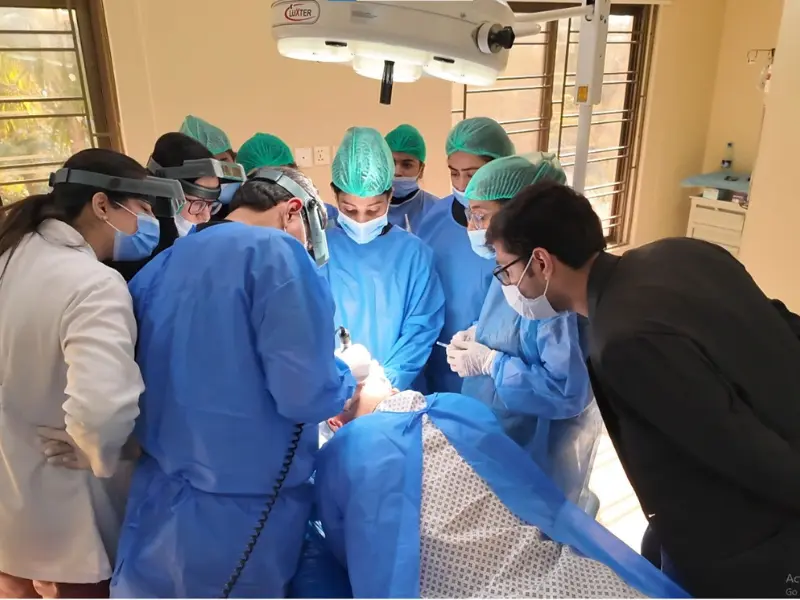
The strongest hair transplant practices are built by surgeons who first develop mastery through hands-on experience, which is why our training is conducted entirely on live patients rather than synthetic models. See our testimonials from doctors who trained this way.
Building Credibility in Hair Restoration Surgery
Patients today are more informed than ever before. They want:
- Ethical surgeons
- Safe procedures
- Honest advice
- Realistic expectations
- Physician involvement
- Consistent results
Credibility is not built through advertising. Credibility is built through:
- Proper patient selection
- Ethical decision-making
- Surgical competency
- Patient safety
- Consistent outcomes
Every successful hair transplant practice is built on trust. And trust is earned one patient at a time.
The IHA Philosophy
At Irfan’s Hair Academy (IHA), we teach our trainees that hair restoration surgery is not merely a cosmetic procedure.
It is a medical and surgical specialty that demands:
- Knowledge
- Discipline
- Ethics
- Patient safety
- Surgical competency
- Lifelong learning
The greatest lesson for any surgeon entering the field is simple:
Your success is not determined by how many patients you operate on. Your success is determined by how many patients you select correctly, how many unnecessary procedures you avoid, and how safely you care for every patient entrusted to you.
In hair restoration surgery, learning when to say “NO” is often the first step toward becoming an exceptional surgeon.
Ready to build a hair transplant practice founded on real surgical competency, not shortcuts? Enroll in our hands-on hair transplant training course in Islamabad and learn directly from Dr Rana Irfan on live patients.
Explore upcoming batches →